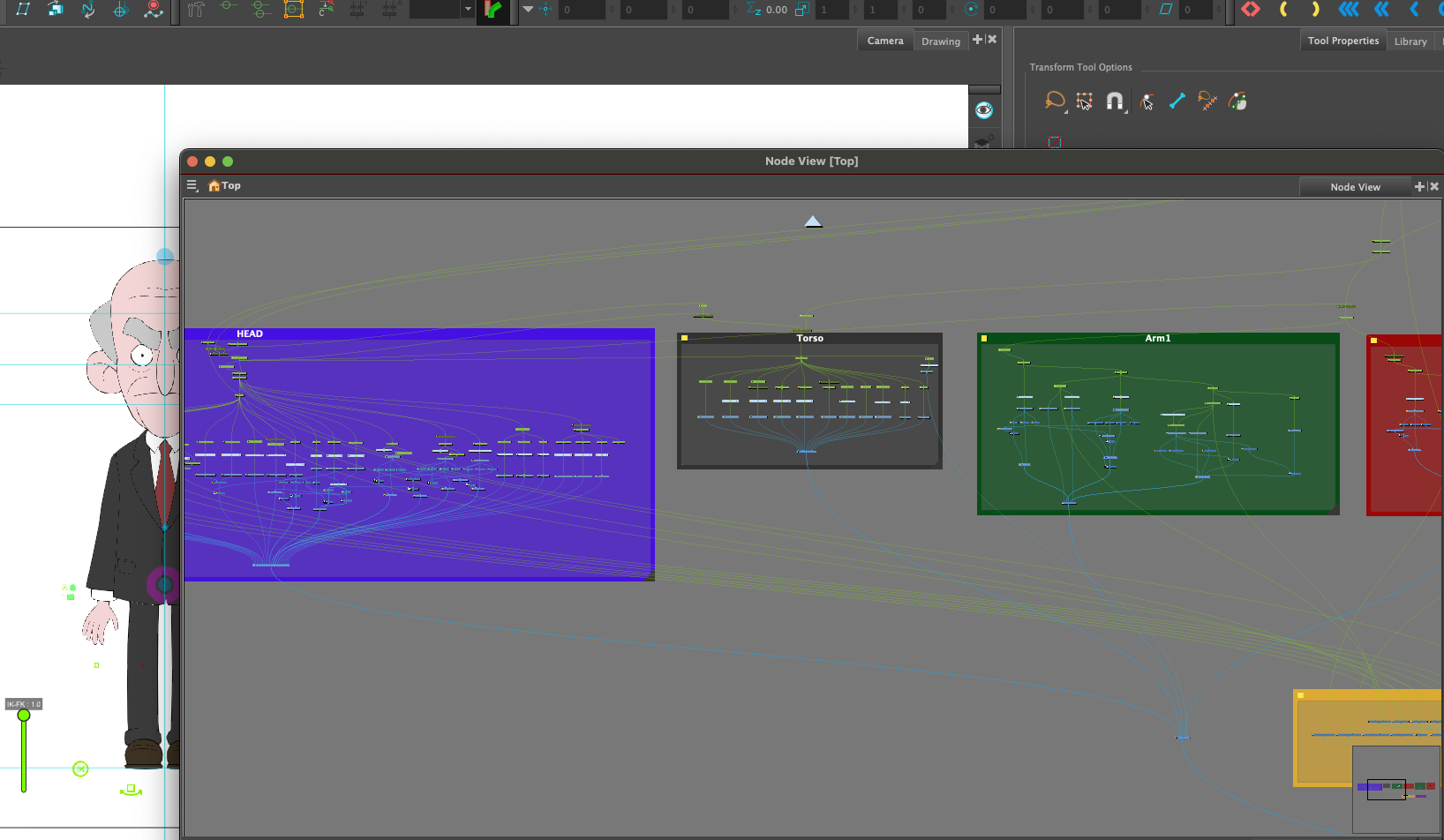

In 2D animation production, performance is everything — but performance is only possible when the rig supports it.
Whether you’re working in Toon Boom Harmony, Moho, or another professional animation pipeline, rig organisation directly affects how quickly and confidently you can animate.
In series production, where deadlines are tight and shots move between artists, a clean character rig isn’t a luxury — it’s infrastructure.
Here’s why.
1. Poor Rig Structure Slows Down Character Animation
On paper, a rig might “work.”
Arms bend. Eyes blink. Mouth swaps function.
But in practice, if:
- Controls are inconsistently named
- Deformers are buried deep in nested groups
- Pivots are misaligned
- Master controls aren’t clearly separated
Every adjustment costs time.
In character animation, you’re constantly making micro-adjustments — arc corrections, spacing tweaks, subtle performance refinements.
If you’re hunting through layers to find the correct forearm control, you’re breaking flow. Over the course of a production schedule, those seconds compound into hours.
2. Clean Naming Conventions Reduce Cognitive Load
Professional 2D animation already demands high mental bandwidth.
You’re thinking about:
- Acting and performance
- Timing and spacing
- Weight and overlap
- Model consistency
- Scene composition
Your rig structure should reduce friction, not add to it.
Clear naming conventions (N_arm_upper_CTRL, head_master_CTRL, mouth_swap_grp, etc.) allow you to locate controls instantly. Logical grouping ensures you know exactly where deformation systems live.
In a structured animation pipeline, predictability equals speed.
3. Consistency Across a Series Pipeline Is Critical
In broadcast or streaming series production, you’re rarely animating in isolation.
Shots are passed between animators. Episodes overlap in production. Multiple artists may touch the same character across a season.
If each rig is built differently:
- Controls behave differently
- Hierarchies are inconsistent
- Deformation systems vary
Every animator wastes time re-learning the character.
Standardised rig organisation across a show ensures:
- Faster onboarding
- Cleaner handovers
- Fewer production errors
- Greater model consistency
That consistency is invisible on screen — but essential behind the scenes.
4. Mid-Scene Rig Fixes Are Expensive
In Toon Boom Harmony or Moho, small rigging issues can quickly escalate:
- Incorrect pivot placement
- Deformers fighting each other
- Improper hierarchy linking
- Constraint conflicts
When discovered mid-shot, you either work around them (compromising performance) or stop and rebuild (losing time).
Well-structured character rigging anticipates common animation needs:
- Clear master controls
- Independent limb systems
- Clean deformation chains
- Predictable FK/IK behaviour (where applicable)
Investing time in clean rig setup saves exponentially more time in production.
5. Rigging Is Part of the Animation Process
There’s a misconception that rigging is a technical step that happens before “real” animation begins.
In reality, character rigging directly shapes performance quality.
A well-built rig:
- Encourages strong posing
- Makes arcs easier to refine
- Supports expressive acting
- Reduces technical friction
When controls are intuitive and logically structured, the animator can focus fully on performance.
That’s where the real work happens.
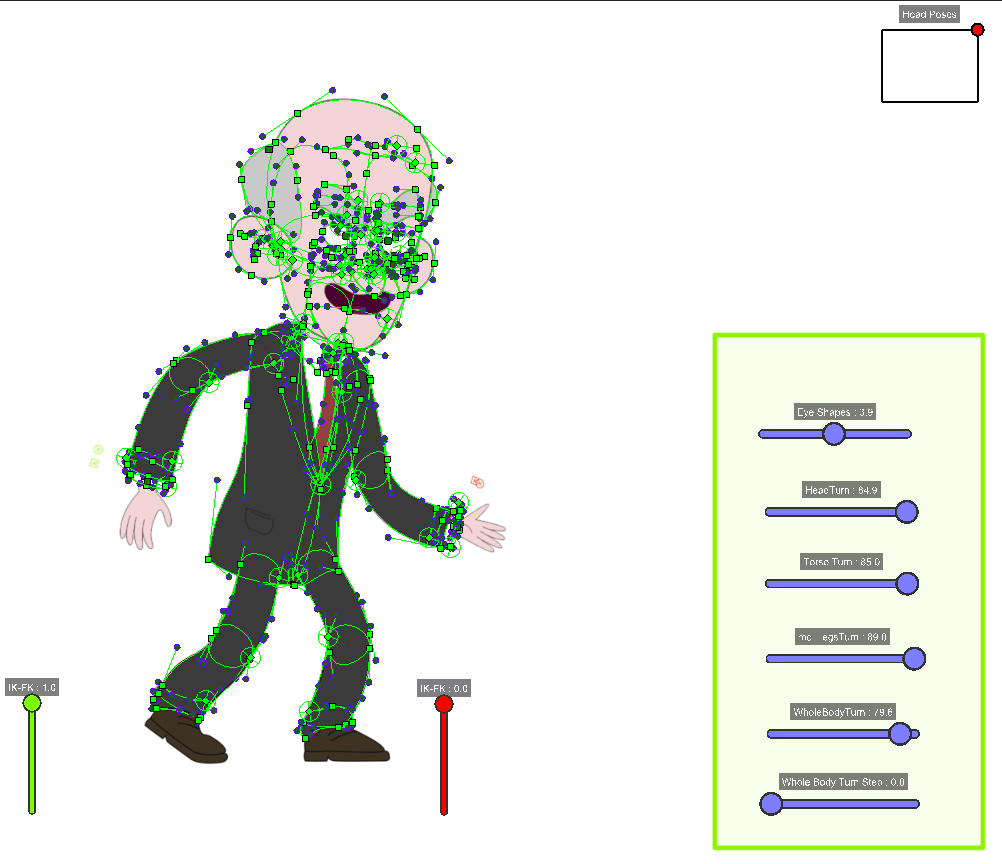
What Good Rig Organisation Looks Like in Practice
In professional 2D animation workflows, strong rig organisation typically includes:
- Consistent naming conventions across characters
- Logical, shallow hierarchy (no unnecessary nesting)
- Clearly separated deformation groups
- Clean pivot alignment
- Labelled master controls
- Scene files structured for collaborative production
It’s not flashy.
It’s disciplined.
And discipline is what keeps series production moving.
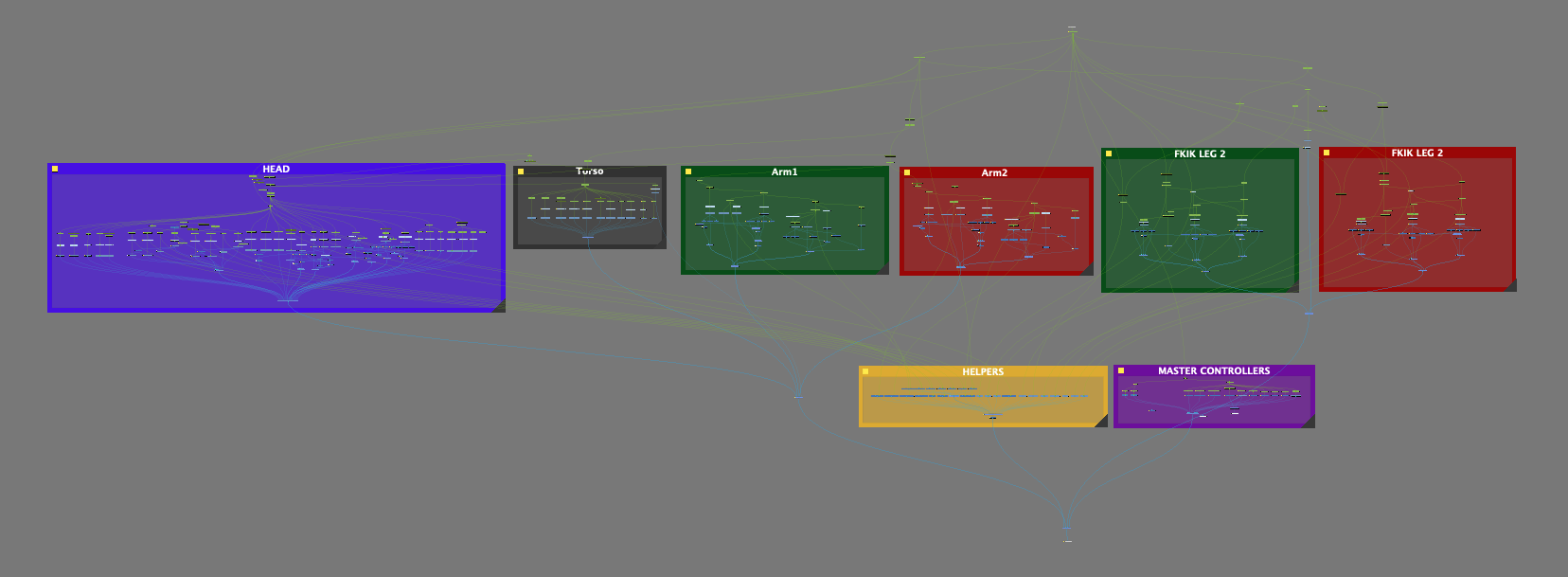
Final Thought
In character animation, small inefficiencies multiply quickly.
Five seconds lost per adjustment becomes hours across a sequence. Hours become days across an episode.
In deadline-driven environments — whether indie productions or large studio-level broadcast animation — that difference matters.
Rig organisation isn’t just technical housekeeping.
It’s production strategy.
Need Help With Rigging or Series Animation?
If you’re developing a 2D animated series or refining your animation pipeline, I offer:
- Character rigging in Toon Boom Harmony and Moho
- Production-ready rig clean-up and optimisation
- Animation support for series work
- Pipeline-aware character setup
With over 25 years in visual production and experience contributing to broadcast animation, I understand both the creative and technical demands of series work.
If you’re building animated worlds and need structured, production-focused support — feel free to get in touch.

 English
Leave a Reply